Aurora Australis Captivates Australians — Southern Lights Forecast Spikes Searches
Australians rush online to track Southern Lights visibility as geomagnetic activity lights up the southern sky.
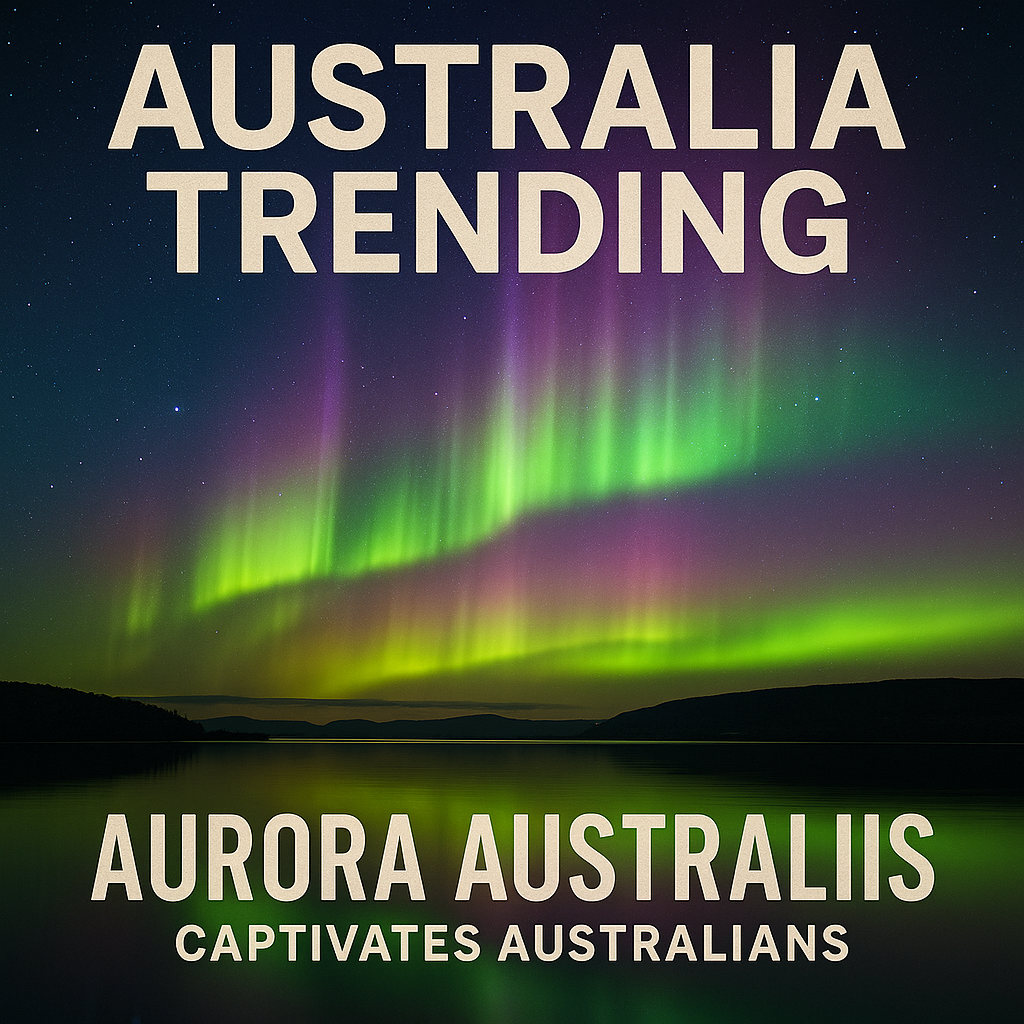
Aurora Australis Captivates Australians — Southern Lights Forecast Spikes Searches
Introduction
Over 5000 Australians searched for “aurora forecast” and “Southern Lights” tonight after reports of vivid auroral displays visible from Tasmania, Victoria, and parts of South Australia.
Social media filled with real-time images as residents braved the cold to witness the natural spectacle.
Why It’s Trending
An intense geomagnetic storm, triggered by solar flares from the sun’s recent activity, created ideal conditions for viewing the Aurora Australis.
Bureau of Meteorology updates and dedicated astronomy pages alerted users that rare strong displays could appear as far north as Melbourne.
Background or Context
Auroras are caused by charged solar particles interacting with Earth’s magnetic field.
While northern counterparts (Aurora Borealis) often make global headlines, Australians rarely experience such strong Southern Lights — making tonight’s event particularly exciting.
Impact or Reaction
Twitter/X and Facebook community groups shared real-time photos and viewing guides.
Local news outlets highlighted viewing points from Hobart’s Mount Wellington to the Mornington Peninsula.
Searches spiked as people sought live maps, forecast charts, and camera-setting tips.
Interest Over Time
Google Trends data shows searches peaked around 9 PM AEST (value = 100) before tapering toward midnight.
The curve exhibits a sharp two-hour spike followed by steady mid-level interest.
Top regions: Tasmania, Victoria, and South Australia, reflecting visibility zones.
Trend Dynamics
The pattern shows strong regional curiosity tied to real-time viewing conditions.
Top related queries: “aurora australis forecast,” “southern lights tonight Australia,” and “best place to see aurora.”
Takeaway
The surge reveals Australians’ deep fascination with rare natural phenomena and their growing reliance on live digital forecasting for shared sky-watching moments.